All showcases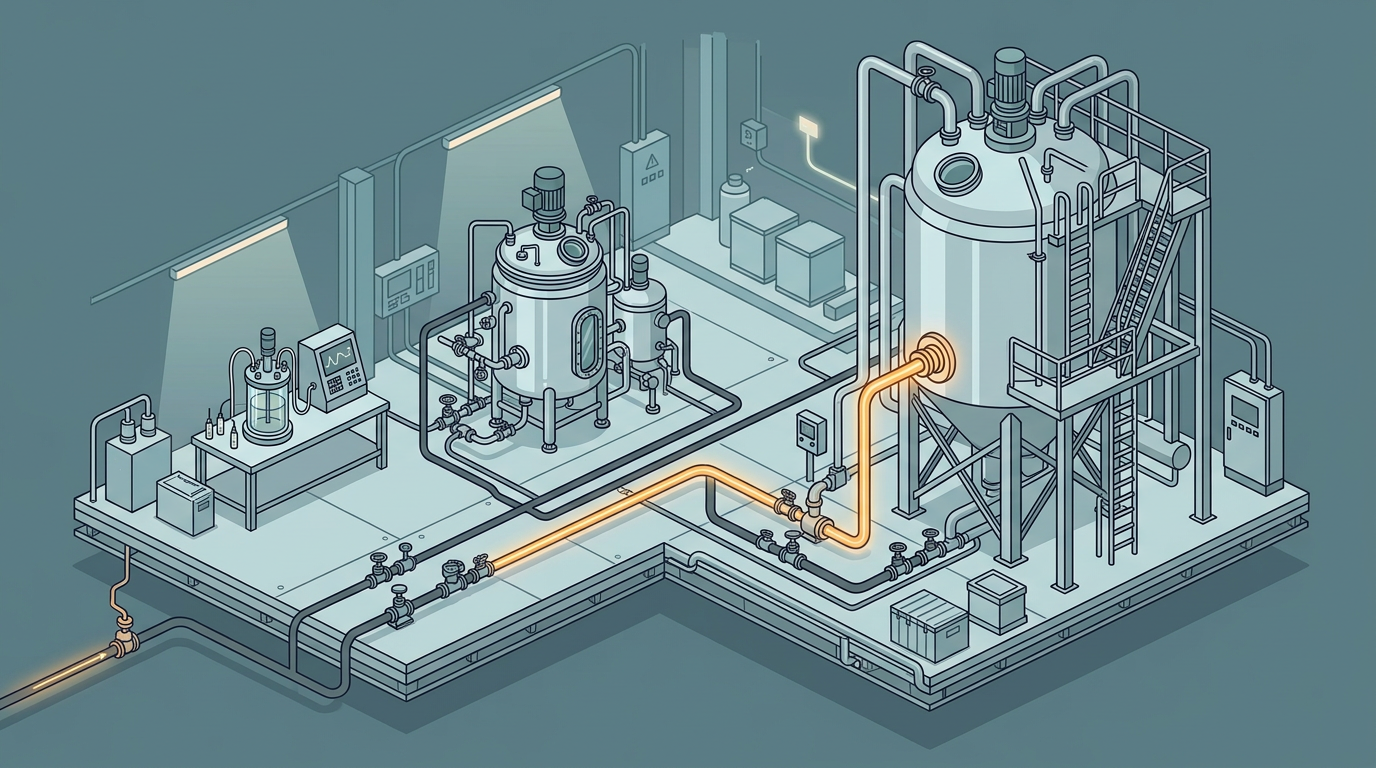
BiomanufacturingAdvanced10:00v1.0
Bioprocess Fermentation Yield and Scale-Up
Which feed, induction and control strategy improves product titer and conversion while limiting byproducts and scale-up risk?
CausalDigital twinsSystem dynamicsDESMonte CarloOptimization Reviewed · validated 2026-11-18
Educational synthetic process with a simplified kinetic model. Contains no proprietary strain data and no wet-lab operating instructions.
0:00 / 10:00
Keyboard: Space play/pause · arrows seek 5s · C captions
Calibrate a reactor twin from designed experiments, simulate mass-balance dynamics under biological uncertainty, and pick feed, induction and oxygen settings that raise titer within byproduct and failure limits.
- Business context
- A recombinant protein process is moving from a 2 L bench reactor to a 2,000 L production vessel. Oxygen transfer is weaker at scale, and fast feeding produces acetate that inhibits growth.
- Intervention
- Set the feed rate, the induction time and the dissolved-oxygen setpoint for the fed-batch run.
- Outcome
- Product titer, acetate byproduct, batch failure probability and batch duration across 2,000 simulated batches.